Publications
For submission of articles or Working Papers to CEsA, please send an email to:
comunicacao@cesa.iseg.ulisboa.pt
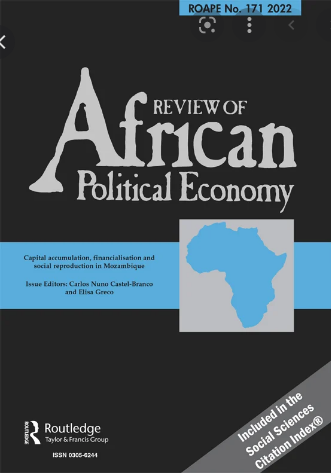
Mozambique – neither miracle nor mirage
Mozambique – neither miracle nor mirage by Carlos Nuno Castel-Branco and Elisa Greco explores how over two decades, in the 1990s and 2000s, international organisations, development cooperation agencies, financial institutions and the media often described the Mozambican economic, social and political trajectory as a ‘miracle’. Hailed as the ‘rising star’ of Africa in 2005 by the New York Times (2005) and by The Economist, the country has long been praised by neoliberal institutions as a model reformer, open and attractive to foreign direct investment (FDI), and for its high rates of economic growth, soaring primary commodity exports and one-digit inflation. While a milder version of this image of a Mozambican ‘miracle’ persisted throughout the 2010s, it started to clash with the reality of worsening inequality, poverty and crisis in social reproduction, as well as the emergence of the first clear signs of a debt crisis yet to come. In the main cities, violent riots triggered by rising costs of basic wage goods and services, over and above average inflation, erupted in February 2008 and again in September 2010. In September 2010, The Economist described these riots as the revolt of the ‘angry poor’, which did not deter international financial think tanks and media from continuing to emphasise the Mozambican ‘miracle’ (The Economist 2010). The country saw the contradiction of worsening poverty, high aid dependency and inequality at the same time as it was being described by the Financial Times as ‘at the centre of unprecedented international investor attention’ (Financial Times 2012, 2010). In May 2014, in her speech to the Africa Rising conference held in Maputo, IMF Managing Director Christine Lagarde highlighted Mozambique’s impressive performance with respect to economic growth as being the result of decades of institution building and sound macroeconomic management, which justified the IMF’s formal permission for Mozambique to obtain new loans on non-concessional terms (Orre and Rønning 2017). Two years later, in 2016, The Economist highlighted the country’s soaring sovereign debt in a context of increasing FDI and aid inflows, and the creditworthiness of the Mozambican economy was downgraded by credit rating agencies from stable average, where it had been from 2003 to 2015, to severe risk of default (Castel-Branco 2020). How can we make sense of this somehow contradictory information? Is Mozambique a ‘miracle’ or a ‘mirage’?
Abstract:
Editorial of the special issue of the Review of African Political Economy (RoAPE), titled “Capital accumulation, financialisation and social reproduction in Mozambique”, volume 49, number 171, March 2022.
Quotation:
Castel-Branco, Carlos Nuno; and Elisa Greco. 2022. “Mozambique – neither miracle nor mirage”. Review of African Political Economy, VOL. 49, NO. 171, 1-10, https://doi.org/10.1080/03056244.2022.2047297
Access the article here,
The historical logic of the mode of capital accumulation in Mozambique
This article by Carlos Nuno Castel-Branco investigates the historical logic of the mode of capital accumulation in Mozambique. By historical logic we mean the objective explanation of the specific characteristics based on an understanding of the country’s historical foundations, and the conflicts and tensions within and related to its structures of accumulation.
Abstract:
This article critically analyses the political economy dynamics and trajectory of the mode of capital accumulation in post-independence Mozambique, focusing on the capitalist restructuring that followed the adoption of the Washington Consensus from the late 1980s. The article highlights the main structural characteristics, dynamics and tensions in the economy, the relationships and conflicts that explain why they reproduce and expand, what makes them change and the nature of the crises that emerge. The argument is that the recent trajectory of the Mozambican economy was not inevitable, and that it can be logically understood and derived from the existing historical conditions of accumulation. Understanding this historical logic enables us to articulate socially transformative actions which are drawn from the objective and concrete analysis of the mode of accumulation and its contradictions, countering idealistic perspectives in political economy.
Quotation:
Castel-Branco, Carlos Nuno. 2022. “The historical logic of the Mode of Capital Accumulation in Mozambique”. Review of African Political Economy, VOL. 49, NO. 171, 11–45 https://doi.org/10.1080/03056244.2022.2040225
Access the article here.
A prognostic of the impact of coronavirus on education in Europe: some evidence
In A prognostic of the impact of coronavirus on education in Europe: some evidence, Lúcia Oliveira highlights the impact of the COVID-19 outbreak on student education and their perceptions corcerning the effect of distance learning on their lives as students. Thus, we conducted a survey to university students in Portugal, during the month of July, who composed a sample of convenience due to time constraints and at the end of the school year, which made the collection of information extremely important to evaluate the real impact at that very moment, taking also into account other external factors. We found out that students live difficult moments at the educational and private level due to the complex professional situation of their parents. All of these factors have a major impact in terms of mental health, as many of them reported experiencing anxiety and stress.
Abstract:
The spread of COVID-19 forced most countries to temporarily close educational institutions. It may cause not only short-term learning loss, but also an additional loss of human capital and reduced long-term economic opportunities. To mitigate this loss, many countries have opted for distance learning. However, issues of equity, participation and evaluation of results emerged as challenges. Universities have postponed or cancelled classes and are taking measures to protect all students and staff from highly infectious diseases. In this study, we highlight the impact of the COVID-19 outbreak on student education and their perceptions corcerning the effect of distance learning on their lives as students. Thus, we conducted a survey to university students in Portugal, during the month of July, who composed a sample of convenience due to time constraints and at the end of the school year, which made the collection of information extremely important to evaluate the real impact at that very moment, taking also into account other external factors. Given the exploratory nature of this empirical research, data analysis is descriptive, measuring opinions, attitudes and perceptions that students have about the impact of the pandemic on their educational path. We found out that students live difficult moments at the educational and private level due to the complex professional situation of their parents. All of these factors have a major impact in terms of mental health, as many of them reported experiencing anxiety and stress. It will be a challenge for universities to deal with this new reality, to prepare an uncertain future not only for students, but also for professionals, who will need more preparation and training to face the new teaching methodologies.
Quotation:
“A prognostic of the impact of coronavirus on education in Europe: some evidence.” 4. International Seminar. Education, Territories and Human Development. Catolica, Faculty of Education and Psychology, Porto. pp. 550-557 https://www.fep.porto.ucp.pt/sites/default/files/files/FEP/eventos/Atas-SIETDH-2021.pdf https://www.repository.utl.pt/handle/10400.5/23273
Access the article here.
From Guangdong to Brazil: Itineraries of a sino-mozambican community
From Guangdong to Brazil: Itineraries of a sino-mozambican community by Lorenzo Macagno explores the itineraries and trajectories of a very specific Chinese community. First, it reconstructs the tenuous incorporation of this group into the colonial society of Mozambique in the 1950s. At the end of this article, I discuss the narratives of deception that emerged after the independence of Mozambique in 1975, when the Chinese had to abandon the possibility of a Portuguese future for their lives and decided to settle in Brazil.
Abstract:
This article explores the itineraries and trajectories of a very specific chinese community. First, it reconstructs the tenuous incorporation of this Chinese into the colonial society of Mozambique, an ex-Portugal overseas province in the 1950s. At the end of this article, I discuss the narratives of deception that emerged after the independence of Mozambique in 1975, when the Chinese had to abandon the possibility of a Portuguese future for their lives and decided to settle in Brazil. Indeed, once considered “good Portuguese” by the colonial authorities, the new context that emerged out of the independence of Mozambique forced these Chinese to “choose” the route of the diaspora. Many settled in Portugal, Canada, the United Sates, and Australia. But the majority, as we shall see, chose Brazil and, in particular, the city of Curitiba in the State of Paraná. Here they became engaged in commercial and professional activities, and in 1989 they founded the Associação Cultural Chinesa do Paraná (Cultural Chinese Association of Paraná).
Quotation:
Macagno, L. (2021). “From Guangdong to Brazil: Itineraries of a sino-mozambican community”, in: André Bueno & Daniel Veras (eds.) Studies in Chinese Migrations. Brazil, China and Mozambique, Rio de Janeiro: Projeto Orientalismo/UERJ, pp. 167-187.
Digitalization and Corporate Transformation: the case of European oil & gas firms
Digitalization and corporate transformation: The case of European oil & gas firms by Jorge Fernandez-Vidal, Reyes Gonzalez, Jose Gasco e Juan Llopis, leveraging the collective learnings from the eight companies studied, aims to help decision-makers with a conceptual guideline to select the most appropriate strategic tools when undergoing a transformation, based on four dimensions that are of high relevance across multiple strategic environments.
Abstract:
Digital technologies have had a tremendous impact on the world and have forced companies to adapt their business models, strategies and management practices. There is a scarcity of research about digital transformation in the energy sector, so this paper aims to analyze this phenomenon in the Oil & Gas sector through a comparative case analysis of eight market leading European Oil & Gas companies. To ensure an adequate methodological approach, the authors have applied Eisenhardt’s framework to build theories from case study research. This article relies on multiple data collection methods. 26 interviews with 18 senior executives from the sample energy firms and two global consulting firms were completed in two separate phases. To complement these interviews, information and data were collected from a range of public sources, such as newspapers, video interviews, business magazines and analyst reports, as well as public information from the eight companies under analysis, such as annual and financial reports, company presentations, regulatory filings and announcements and company news. Our research highlights several transformational moves in the firms under study that bring substantial new capabilities and allow them to achieve market-leading positions in new and digitally native business areas -although modest in size. The sample firms mainly opt for combinations of small transformational strategies to achieve their large transformation goals. However, in many organizations, digital and business transformation initiatives suffer from poor governance and are typically just a collection of unconnected activities, piecemeal strategies and pilot projects. Developing a coherent transformation strategy, with the right structure and governance, remains a challenge for most organizations. This paper, leveraging the collective learnings from the eight companies studied, aims to help decision-makers with a conceptual guideline to select the most appropriate strategic tools when undergoing a transformation, based on four dimensions that are of high relevance across multiple strategic environments.
Quotation:
Jorge Fernandez-Vidal, Reyes Gonzalez, Jose Gasco, Juan Llopis, Digitalization and corporate transformation: The case of European oil & gas firms, Technological Forecasting and Social Change, Volume 174, 2022, 121293, ISSN 0040-1625
Itinéraires de Kamba Simango: dialogue entre un Mozambicain apprenti ethnographe et Franz Boas
Itinéraires de Kamba Simango: dialogue entre un Mozambicain apprenti ethnographe et Franz Boas by Lorenzo Macagno explores the dialogue between anthropologist Franz Boas and Kamba Simango. It also analyses the ethnographic relationship between them and Simango’s cosmopolitan trajectory.
Abstract:
This paper explores the dialogue between anthropologist Franz Boas and Kamba Simango. Simango was born in 1890, in Machanga District, on the coast of present-day Mozambique. In 1914, under the auspices of missionaries of the American Board of Missions, he was sent to the United States to study at the Hampton Institute. Kamba Simango and Franz Boas met for the first time in 1919 at Columbia University. Boas did not want Simango to become a mere “informant,” but a native ethnographer. Based on an exchange of unpublished letters and a series of documents published mainly by missionaries, this article analyzes the ethnographic relationship between Boas and Simango as well as his cosmopolitan trajectory. Kamba Simango’s life and career help us to understand the colonial experience par le bas, and to understand the construction of subjectivities and specific historicities from a less nation-centered perspective.
Quotation:
Lorenzo Macagno, « Itinéraires de Kamba Simango : dialogue entre un Mozambicain apprenti ethnographe et Franz Boas », Cahiers d’études africaines, 244 | 2021, 831-858. URL: https://www.repository.utl.pt/handle/10400.5/22949
Common Causes in Grassroot Development: a case for community-based and communitydriven response in the postpandemic era
The purpose of Common Causes in Grassroot Development: a case for community-based and communitydriven response in the postpandemic era by Vincent Agulonye is to determine the impact of community-based and driven approaches during the lockdowns and early periods of the pandemic. The study examines the impact and perceptions of the state-led intervention. This would help to discover a better approach for postpandemic interventions and policy responses.
Abstract:
The purpose of Common Causes in Grassroot Development: a case for community-based and communitydriven response in the postpandemic era is to determine the impact of community-based and driven approaches during the lockdowns and early periods of the pandemic. The study examines the impact and perceptions of the state-led intervention. This would help to discover a better approach for postpandemic interventions and policy responses. This article used the inductive method and gathered its data from surveys. In search of global opinions on COVID-19 responses received in communities, two countries in each continent with high COVID-19 infection per 100,000 during the peak period were chosen for study. In total, 13 community workers, leaders and members per continent were sampled. The simple percentile method was chosen for analysis. The simple interpretation was used to discuss the results. Findings – The study showed that poor publicity of community-based interventions affected awareness and fame as most were mistaken for government interventions. The study found that most respondents preferred state interventions but preferred many communities or local assessments of projects and interventions while the projects were ongoing to adjust the project and intervention as they progressed. However, many preferred community-based and driven interventions. Research limitations/implications – State secrecy and perceived opposition oppression limited data sourcing for this study in countries where state interventions are performed in secret and oppression of perceived opposition voices limited data collection in some countries. Thus, last-minute changes were made to gather data from countries on the same continent. An intercontinental study requires data from more countries, which would require more time and resources. This study was affected by access to locals in remote areas where raw data would have benefited the study.
A Crying Economy in a Bleeding State: effects of religious and ethnic militia in Nigeria
A Crying Economy in a Bleeding State: effects of religious and ethnic militia in Nigeria by Vincent Agulonye and Daniel Adayi analyses the factors behind the emergence of these militias and the consequences their activities have on local economies in their regions and the national economy.
Abstract:
Nigeria’s multi-ethnic, multi-cultural, and multi-ideological nature is a complexity that should spur a synergy for development in all spheres. The theory of dissipative structures employed suggests that. Contrarily, the pursuit of individual group interests to the detriment of others leads to entropy that dissipates development and economic growth that its population needs. Ethnic and religious militia emerged in response to such problems and threats that has brought in consistent loss of lives and properties which whip the economy and country leaving the state bleeding. Militia internationalisation are important factors discussed as well. A Crying Economy in a Bleeding State: effects of religious and ethnic militia in Nigeria looks at the factors behind the emergence of these militias and the consequences their activities have on local economies of their regions and the national economy.
Quotation:
Agulonye, Uzoma Vincent Patrick e Daniel Adayi (2022). “A crying economy in a bleeding state : effects of religious and ethnic militia in Nigeria”. In Handbook of research on ethnic, racial, and religeous conflicts ans their impact on state and social security, Emilia Alaverdov, Muhammad Waseem Bari (eds), 273-297. Hershey: IGI Global. URL: https://www.repository.utl.pt/handle/10400.5/22739
The future of international development cooperation: fragmentation, adaptation and innovation in a changing world
The future of international development cooperation: fragmentation, adaptation and innovation in a changing world, by Ana Luísa Silva, Luís Mah and Luís Pais Bernardo, stemmed from the need perceived by the Portuguese Platform of NGDOs (PPNGDO) to produce knowledge that will help its members carry out a more informed analysis of the changes in International development cooperation (hereafter, development cooperation). Understanding the transformation underway and the challenges it presents is fundamental for the PPNGDO and its members to jointly outline possible paths into the future, setting out the future direction of action, their priorities and their options.
Abstract:
This study stemmed from the need perceived by the Portuguese Platform of NGDOs (PPNGDO) to produce knowledge that will help its members carry out a more informed analysis of the changes in International development cooperation (hereafter, development cooperation). Understanding the transformation underway and the challenges it presents is fundamental for the PPNGDO and its members to jointly outline possible paths into the future, setting out the future direction of action, their priorities and their options. The study was conducted with three goals in mind: 1) tracing the progress of development cooperation over the past 20 years, while reflecting and discussing the ongoing changes in a multiplex world; 2) addressing the challenges faced by key public and private development cooperation actors view of the ongoing change; 3) contributing to the discussion on this new configuration of development cooperation by offering guidelines based on adaptation and innovation for thinking and acting in a complex, fragmented and fragile multiplex world. This study sought to review the available academic and grey literature (reports from development cooperation organisations, blog posts, online discussions and interviews), and where possible, interviews with professionals from international organisations – both governmental and non-governmental – were used. In the introduction of the study, we contextualise development cooperation in a changing world and describe the framework for discussion applied to each of the following sections: In Part I, changes in development cooperation and ODA are addressed, based on three issues that are crucial for the sectors: quantity, quality and legitimacy. Part II highlights the challenges faced by key public and private actors of development cooperation – either ‘“traditional’” or ‘“new’” ones. Finally, Part III outlines a few guidelines on complexity, fragmentation, and fragility, which can provide useful tools for analysis in the new context. To conclude, we offer civil society organisations some points for reflection.
Quotation:
Silva, Ana Luísa, Luís Pais Bernardo e Luís Mah (2021). The future of international development cooperation : fragmentation, adaptation and innovation in a changing world. Lisboa: Plataforma Portuguesa das ONGD. URL: https://www.repository.utl.pt/handle/10400.5/21214
Access the article here.
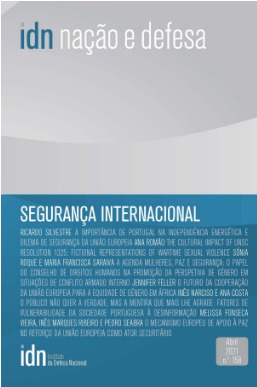
O Mecanismo Europeu de Apoio à Paz no Reforço da União Europeia como Ator Securitário
Authored by Melissa Fonseca Vieira, student of the Masters in Development and International Cooperation, Inês Marques Ribeiro and Pedro Seabra, O Mecanismo Europeu de Apoio à Paz no Reforço da União Europeia como Ator Securitário reflects on the European Union and how it has sought to strengthen its capabilities to promote conflict prevention.
Abstract:
In a volatile global context, the European Union has sought to strengthen its capabilities in order to promote conflict prevention, peace-building and the strengthening of international security. However, although it currently has mechanisms for crisis management and conflict prevention, these have not been sufficient or fully effective. The European Peace Facility (EPF) has emerged as an attempt to consolidate the EU’s role as a global security actor, through the direct financing of military operations. O Mecanismo Europeu de Apoio à Paz no Reforço da União Europei analyses its creation and the role it is expected to play in the context of the CSDP, providing the necessary framework within the framework of previous similar experiences. Despite the challenges imposed by its creation, the APRM represents a strong commitment by the EU to consolidate peace and strengthen security at global level.
This article was published in ISCTE-IUL’s repository. To access, click here.