Postcolonialism

Mozambique, 50 years (1975–2025): Does the struggle continue?
Abstract:
This article revisits Samora Machel’s famous slogan ‘A luta continua’ (‘The struggle continues’) to analyse the 50 years of Mozambican independence (1975-2025). It argues that the initial anticolonial struggle has transformed into a series of protracted internal conflicts. Drawing on historical analysis and long-term ethnographic insight, the article traces a sequence of challenges: from FRELIMO’s postindependence turn to Marxism-Leninism and the devastating civil war with RENAMO, to the contemporary pressures of extractive capitalism and the recent jihadist insurgency in Cabo Delgado. The article analyses this latest conflict as a complex manifestation of local grievances articulated through a religious idiom. It concludes that in the face of these persistent crises and a flawed 2024 election, Machel’s revolutionary slogan now functions as a poignant interrogation of Mozambique’s unresolved contemporary dilemmas.
Cite this paper:
Macagno, L. (2025), Mozambique, 50 years (1975–2025): Does the struggle continue?. Anthropology Today, 41: 21-24. https://doi.org/10.1111/1467-8322.70006

Working Paper 204/2025: Insegurança e Terrorismo na Região do Sahel
Abstract:
If terrorism is political violence against civilians or unarmed people, it can either be employed by an autocratic state, or be instrumental in the subversive activity of paramilitary groups seeking to overthrow governments or change the current system. It is a phenomenon distinct from war or guerrilla warfare, although it can be an available resource in a hybrid conflict that also includes mercenaries and militias. This article gives examples of insecurity and terrorism in the Sahel region. It analyses jihadist groups that resort to coercive activities, therefore abusing vulnerable, conservative or fundamentalist peoples in order to achieve political-religious goals, and thus manipulating complex strategic stages with disastrous repercussions for the present and future of the countries involved. Secondary bibliography was used for scientific research and analysis, seeking an innovative and multifactorial approach to explaining a phenomenon that is difficult to eradicate in the Sahel, for the reasons identified.
Cite this Working Paper:
Galito, Maria Sousa (2025). “Insegurança e Terrorismo na Região do Sahel”. CEsA/ISEG Research – Documentos de trabalho nº 204/2025

African women’s trajectories and the Casa dos Estudantes do Império
Abstract:
This article compares the trajectories of different women who crossed the Casa dos Estudantes do Império (CEI), a formal institution created in Lisbon by students from the colonies with the support of the Portuguese dictatorial regime in 1944, that became a platform for anti–colonialism. Due to the role played by the CEI in the political and social paths of the leaders of African national liberation movements, historiography has privileged masculine accounts. In contrast, the roles and lives of women linked to the CEI remain unexplored or approached from a vision of “methodological nationalism”, with few exceptions. Addressing these trajectories from a transnational and “Afro–Iberian” lens and through the scrutiny of several sources allows us to reflect on a diversity of gender, race, class, and political ideology. The final aim is to illuminate some aspects of the Afro–Iberian mosaic from a gendered and postcolonial perspective.
Cite this Book Chapter:
Falconi, J. (2024). African women’s trajectories and the Casa dos Estudantes do Império In: Ethnicity and Gender in Portugal and Spain. volume 47, issue 7 (2024), pp. 1403-1419
Brief Paper 1/2024: Reposicionamento do activismo político e social em Moçambique: Uma análise conjecturando a eclosão de conflitos sociopolíticos
Abstract:
This Brief Paper discusses the repositioning of political and social activism in Mozambique within a context heavily characterised by the active participation of citizens in the 2023 elections, a stark contrast to previous elections, which were largely marked by weak political and social activism. In this context, the Brief Paper argues that this repositioning is linked to the fact that the Mozambican population has acquired a new political and social awareness, marked by a quest for truth and authenticity in their leaders. This repositioning also reflects the population’s readiness to confront state power and entails two domains of analysis with harmful consequences for the Mozambican government: the domestic domain and the external domain. This occurs because the population increasingly shows a diminished fear of repression carried out by the police and military. Moreover, this repositioning has highlighted the existence of a latent and ongoing conflict between the current Mozambican government and the 1990–2000 generation. Methodologically, two tools supported this analysis: bibliographical techniques and documentary analysis. Theoretically, the Brief Paper is grounded in Maslow’s Basic Needs Theory, combined with the Frustration-Aggression Theory from conflict studies. Finally, the conjectures presented in this Brief Paper suggest that the current Frelimo government has lost legitimacy in the eyes of the people, particularly among the 1990–2000 generation. However, there are also conjectures based on the assumption that Frelimo retains legitimacy through two analytical perspectives: a traditional perspective and an institutional perspective. These two perspectives complement each other and justify Frelimo’s continued hold on power.
Cite this Brief Paper:
Chisseve, Delton (2024). “Reposicionamento do activismo político e social em Moçambique : uma análise conjecturando a eclosão de conflitos sociopolíticos”. CEsA/CGS – Brief Papers nº 1/2024
Águas Pós-coloniais em Romances Angolanos e Moçambicanos
Abstract:
This article aims at mapping the narrative role of water in Angolan and Mozambican literature, through the comparative reading of four novels: O desejo de Kianda (1995) by the Angolan Pepetela; O livro dos Rios (2006) by Luandino Vieira; Água: uma novela rural (2016) and Ponta Gea (2017), both by Mozambican João Paulo Borges Coelho. The introduction places the proposed cartography within the framework of ecocritical studies, whose various paradigms offer useful tools and concepts for reading the selected literary works. The thematic and comparative methodological approach highlights experiences and imaginaries common to two post-colonial contexts, despite the difference in scenarios, themes, aesthetic choices and narrative strategies. The results of the analysis demonstrate that water is a crucial element in narrating post-colonial Angolan and Mozambican societies.
Cite this article:
Falconi, Jessica (2024). “Águas pós-coloniais em romances angolanos e moçambicanos”. Caligrama: Revista de Estudos Românicos, 29(1):75-86
Working Paper 199/2024: Literatura e Ecologia: Representações da água em romances angolanos e moçambicanos
Abstract:
This article offers a brief cartography of the narrative role of water in Angolan and Mozambican literature, through a comparative reading of four novels: O desejo de Kianda (1995) by the Angolan Pepetela; De Rios Velhos e Guerrilheiros. I. O Livro dos Rios (2006) by Luandino Vieira; Água. Uma novela rural (2016) and Ponta Gea (2017) both by the Mozambican João Paulo Borges Coelho.
The introduction places the proposed cartography within the framework of ecocritical studies, whose various paradigms offer useful tools and concepts for reading the selected literary works. The thematic and comparative methodological approach highlights experiences and imaginaries common to two post-colonial contexts, despite the difference in scenarios, themes, aesthetic choices and narrative strategies. The analysis aims to demonstrate that water is a crucial element in narrating post-colonial Angolan and Mozambican societies.
Cite this Working Paper:
Falconi, Jessica (2024). “Literatura e Ecologia: Representações da água em romances angolanos e moçambicanos”. CEsA/CGS – Documentos de trabalho nº 199/2024
African women’s trajectories and the Casa dos Estudantes do Império, Ethnic and Racial Studies
Abstract:
This article compares the trajectories of different women who crossed the Casa dos Estudantes do Império (CEI), a formal institution created in Lisbon by students from the colonies with the support of the Portuguese dictatorial regime in 1944, that became a platform for anti–colonialism. Due to the role played by the CEI in the political and social paths of the leaders of African national liberation movements, historiography has privileged masculine accounts. In contrast, the roles and lives of women linked to the CEI remain unexplored or approached from a vision of “methodological nationalism”, with few exceptions. Addressing these trajectories from a transnational and “Afro–Iberian” lens and through the scrutiny of several sources allows us to reflect on a diversity of gender, race, class, and political ideology. The final aim is to illuminate some aspects of the Afro–Iberian mosaic from a gendered and postcolonial perspective.
Citation:
Jessica Falconi (2023) African women’s trajectories and the Casa dos Estudantes do Império, Ethnic and Racial Studies, DOI: 10.1080/01419870.2023.2289141
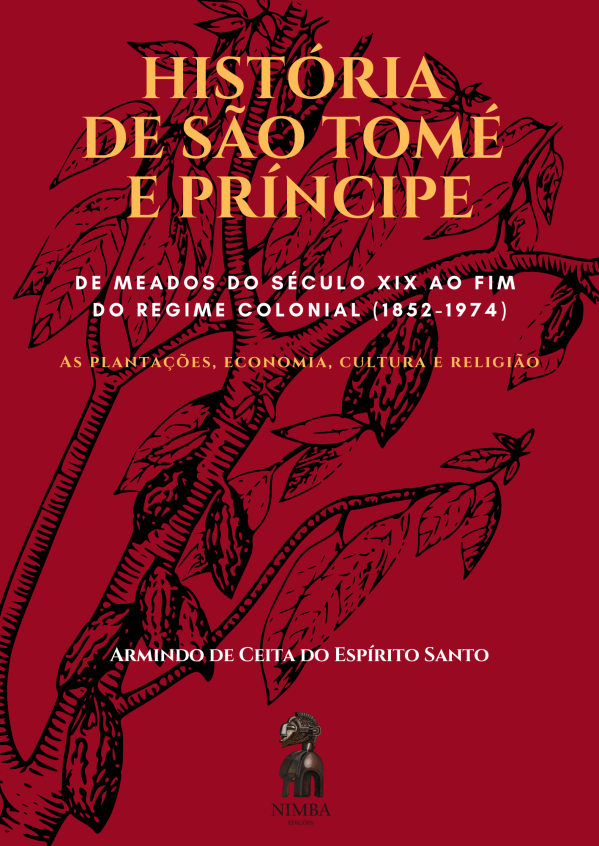
História de São Tomé e Príncipe de Meados do Século XIX ao Fim do Regime Colonial (1852-1974): As plantações, economia, cultura e religião
Abstract:
This book explains the reasons that led the Portuguese to recolonize the São Tomé and Príncipe islands from 1852 onwards and the strategies they adopted to institutionalize the new colonial order in the archipelago. They removed the natives from ownership of land and institutions and introduced the plantation economy model around which all economic and social life began to revolve, with the territory being divided between the populations of large plantations and the native populations. Work and land were exploited to the point of exhaustion, with mistreatment, racial discrimination, and a progressive decline in soil productivity. The production crisis emerged and exposed the limits of the plantation economy model. There were several attempts to forcefully hire native labor, which generated many conflicts and led to the “Batepá” massacre of 1953. This event raised the awareness of nationalists for the independence of the archipelago, which occurred on July 12, 1975. The book also addresses culture and religion as central elements that shape São Tomé and Príncipe society and identity.
Quotation:
Espírito Santo, A. (2023). História de São Tomé e Príncipe – De Meados do Século XIX ao Fim do Regime Colonial (1852-1974): As plantações, economia, cultura e religião. Lisboa: Nimba Edições.
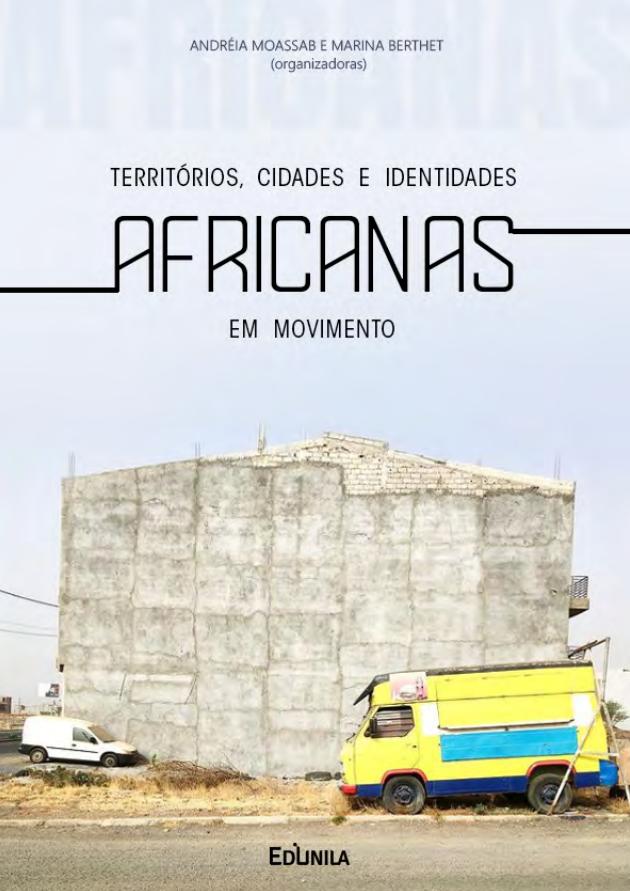
África, o berço da modernidade: por uma visão pós-colonial da modernidade e do território
Abstract:
In África, o berço da modernidade: por uma visão pós-colonial da modernidade e do território. In Territórios, cidades e identidades africanas em movimento, the author starts by taking a brief look at what is conventionally called modernity and what constitutes the substratum on which the “West” anchors itself for a triumphant and universalist autonarrative. Various authors, mainly from the mid-eighties onwards, have sought to demystify the origins of Western civilisation and modernity, most notably the three volumes of Black Athena: The Afroasiatic Roots of Classical Civilization (1987/1991/2006), by Martin Gardiner Bernal.2 Other authors have followed in Bernal’s footsteps to some extent, one of them being the philosopher and historian Enrique Dussel with his work Política de La Liberación: Historia Mundial y Crítica [Liberation Policy: World History and Critique] (2007): World History and Critique] (2007), in which, situated in the field of postcolonial theory, he argues that Hellenocentrism is the father of Eurocentrism and that, given that the so-called “Greek miracle” by the German Romantics of the eighteenth century does not exist, this means having to start “anew” the history of political philosophy. To this end, he considers it essential to redefine the beginning of modernity. It is worth pointing out that it is “postmodernity” – called the historical period that seeks to overcome, or surpasses, modernity – that will give rise, in Western academia and its satellites, not only to a debate about the “postmodern condition” – or about its being the “cultural logic of late capitalism” – but also about the “vision” of modernity itself. Although many prefer expressions other than “postmodern”, or change their preference -such as Zygmunt Bauman, who starts talking about “liquid modernity”, or Gilles Lipovetsky, who prefers the term “hypermodernity”, or others who talk about “incomplete modernity”, or “late modernity” or “alternative modernities”-, in essence they do not put the emphasis on a critical analysis of the hegemonic Anglo-Saxon periodisation of modernity.
Quotation:
Barros-Varela, O. (2022). África, o berço da modernidade: por uma visão pós-colonial da modernidade e do território. In Territórios, cidades e identidades africanas em movimento. Andréia Moassab, Marina Berthet (Orgs.), 11-31. Foz do Iguaçu: EDUNILA, 2022. ISBN: 978-65-86342-32-1
Literatures and Cultures of the Indian Ocean
Abstract:
Portuguese Studies is a biannual multi-disciplinary journal dedicated to research on the cultures, literatures, history, and societies of the Lusophone world. Ana Mafalda Leite, Elena Brugioni, and Jessica Falconi were the organizers of this issue of the journal, Literatures and Cultures of the Indian Ocean. The president of the Editorial Board for 2021 is Catarina Fouto, and the Journals editor is Emanuelle Rodrigues Dos Santos. The journal is published by the Modern Humanities Research Association (MHRA), an international organization with members in all parts of the world. The aim of the Association is to encourage and promote advanced study and research in the field of modern humanities. It is concerned to break down barriers between scholars working in different disciplines and to maintain the unity of humanistic scholarship in the face of increasing specialization. The present volume results frorn the scholarly work conducted by members of the research project NILUS — Narratives Ofthe Indian Ocean in the Lusophone Space. The main purpose of the project consisted in establishing a theoretical and disciplinary connection between Lusophone Literary, Visual and Cultural Studies and the transdisciplinary field Of Indian Ocean Studies. The project on the written and visual narratives hailing from, or related to, the territories formerly colonized by Portugal along the Indian Ocean, specifically Mozambique, Goa, and East Timor. This volume, therefore, constitutes an attempt to bridge a significant critical and disciplinary gap, motivated by an almost total lack of dialogue among the above-mentioned fields of study. This lack of dialogue becomes ever more apparent if we bear in mind the increasingly central role played by historical, anthropological, literary, and cultural studies of the Atlantic Ocean in addressing colonial and postcolonial cultural and identity-related outputs and relations from the territories that Out Of Portuguese colonial rule. Consider, for instance, the influence of the notion of Brown Atlantic (Atlântico Pardo), de,’eloped by the anthropologist Miguel Vale de Almeida as a counterpoint to Paul Gilroy’s Black Atlantic, or the use of the Portugal -Brazil-Angola triangulation in comparative and transnational- oriented literary and cultural studies.4
Quotation:
Leite, A.M.; Brugioni, E. & Falconi, J. (2021) (eds). “Literatures and Cultures of the Indian Ocean”, Portuguese Studies 37.2.