Professor Eduardo Sarmento visits the State University of Goiás as part of the cooperation with CEsA
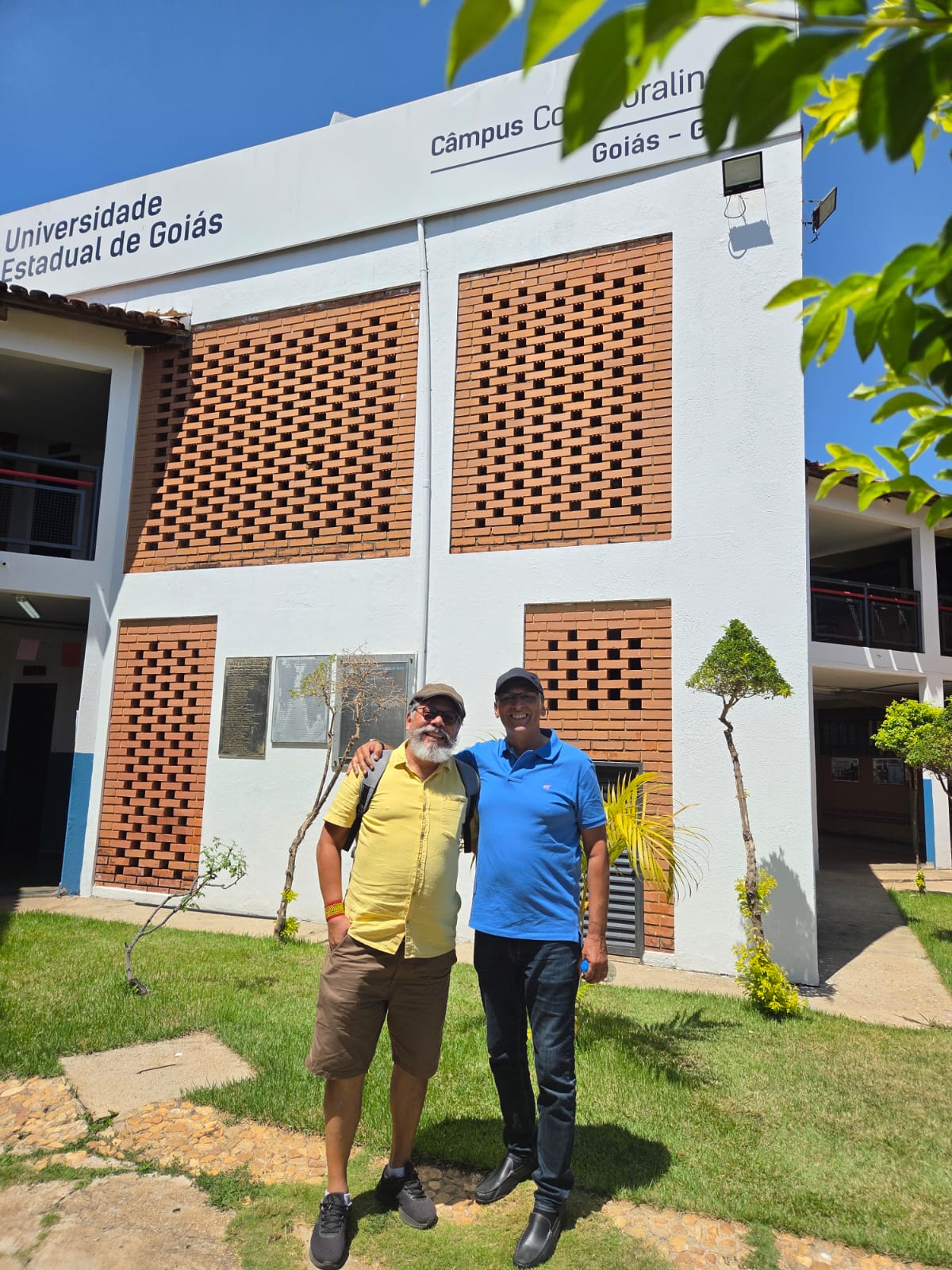
CEsA—the Center for African and Development Studies—was represented by its President, Professor Eduardo Moraes Sarmento, in a visiting professor program organized by the Graduate Program in Territories and Cultural Expressions in the Cerrado (TECCER) at the State University of Goiás (UEG).
The initiative took place from September 8 to 13, 2026, in the cities of Anápolis and Goiás, and included a series of academic, scientific, and cultural activities aimed at promoting exchange among researchers, faculty, and students from both institutions.
As part of the visit, Professor Eduardo Sarmento participated in a roundtable discussion with master’s and doctoral students from the PPG-TECCER, focusing on CEsA’s research areas, the internationalization of graduate studies, and opportunities for academic mobility. The program also included a working meeting with faculty and researchers, focused on identifying opportunities for joint research, joint supervision agreements, and long-term international cooperation projects.
In the city of Goiás, the President of CEsA participated in a roundtable discussion and delivered a lecture on Small Island Developing States (SIDS) and the developmentalist paradigm, encouraging discussion on issues of development and international relations.
The itinerary also included participation in the opening of the Cerrado Festival at UEG’s Cora Coralina Campus, as well as technical and cultural visits to the historic center of the city of Goiás—designated a UNESCO World Heritage Site—and to various sites of cultural and urban interest in Goiânia.
The visit took place within the framework of the international cooperation established between UEG and CEsA/ISEG Research/ISEG/University of Lisbon, formalized through a Memorandum of Understanding signed in October 2025. The partnership aims to promote academic and scientific exchange and create opportunities for the development of joint initiatives in the areas of research, advanced training, and academic mobility.
The CEsA President’s participation in this program thus represents an opportunity to deepen the dialogue between the two institutions and explore new possibilities for international collaboration among their academic communities.
Image Gallery


Author: CEsA Communications (comunicacao@cesa.iseg.ulisboa.pt)
Images: CEsA/Reproduced